
The idea of Guillermo del Toro adapting Mary Shelley’s Frankenstein as a passion project feels too obvious. Luckily, we can breathe a sigh of relief.
The Mexican director has made a name for himself as a craftsman of mostly original monsters and nightmares (from Cronos to Pan’s Labyrinth), paired with a romantic sensibility that sympathizes with forms of otherness (Hellboy, The Shape of Water). Del Toro loves monsters and cannot help but feel sympathy for them, and there is probably no bigger monster, almost canonically “the original one,” than the man-made, near-human creature at the center of Shelley’s classic of horror literature. Subtitled The Modern Prometheus, the 1818 novel remains a philosophically rich work as well as absorbing literature. Such a legacy does not need much introduction or context, with countless representations (plus homages and parodies) behind it. So, no one is expecting the ultimate adaptation to end them all. Del Toro’s interpretation is faithful to the spirit of the novel and much of its structure, but with substantial changes. This new Netflix-produced version is a luxurious fan-fiction in the likeness of a new author.
Victor Frankenstein (Oscar Isaac) is convinced he can play God. As a doctor and scientist, his goal is not so much resurrection as the creation of a revived man, assembled from the parts of other corpses and brought back to life. Using technology that involves experiments in physics, chemistry, electricity, and an intensive knowledge of anatomy—especially the lymphatic system—this madman comes close to achieving his goal. This is not the starting point of the novel, nor of del Toro’s film, but it is part of the familiar iconography of the book and the numerous cinematic adaptations. However, by the time we reach this point, del Toro has built enough background and foreshadowing to make us feel excited by the already familiar.
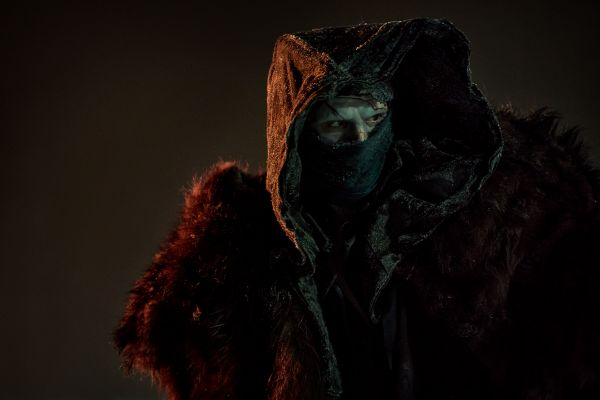
Thus, the film actually begins with the first sighting of the creature (Jacob Elordi) as a monster pursuing a dying Victor in the Arctic. This provides the narrative framing device for both characters to tell the story that has brought them there, with a ship’s captain as their perplexed audience. Victor’s childhood, wealthy at first, was marked by an oppressive father (Charles Dance) and the eventual death of his mother (Mia Goth) while giving birth to her second son. Afterwards, Victor has recurring nightmares of a dark angel: a distorted version of Saint Michael, masked, with red armor, and surrounded by flames. He interprets this as a sign that he has been chosen for a mission no one else has dared to attempt.
As this is a del Toro film, the exquisite production design, costumes, and visual effects are top-notch, with seductive visual power. His Frankenstein has more in common with Francis Ford Coppola’s highly stylized and romantic Dracula than with Kenneth Branagh’s elegant and more faithful adaptation from the same decade.
From Boris Karloff to Robert De Niro, a Frankenstein film is as good and effective as its portrayal of the monster. For that same reason, this new version becomes instantly essential because of Elordi’s performance and the remarkable prosthetic makeup that depicts the creature in a way never seen before—almost extraterrestrial and Christ-like, an ecce homo with scars and stitches. Equally vulnerable and terrifying, Elordi’s embodiment is also sexy and beatific (even though we witness the terrible consequences of his strength and power). It is a very del Toro interpretation, in which he cannot help but feel affection for the creature’s existence.
The first interaction between Victor and his creation also differs from the novel, as Victor does not fear the monster but instead feels awed by what he sees as its “perfection.” The creature learns to say his creator’s name, while the scientist instructs him not to fear the sun. The scene takes on both erotic and religious dimensions—father and son—both half-naked, extending their arms toward the window to be bathed in light.
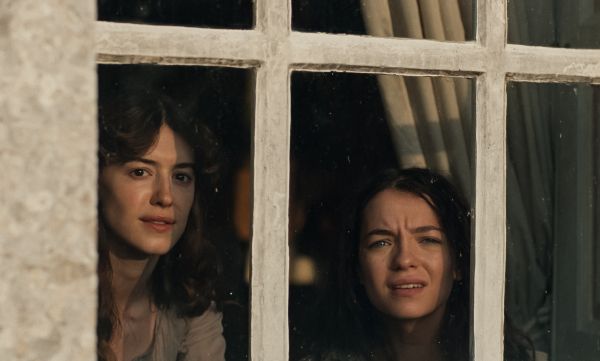
Unfortunately, Victor later becomes convinced he has made a mistake, believing his creature is insufficiently developed as a human being and so keeps him chained. A few brief interactions between the creature and Elizabeth (also Mia Goth), Victor’s soon-to-be sister-in-law, become the only display of kindness he experiences during captivity. This lack of empathy from Victor toward his creation becomes the dramatic crux that separates and antagonizes them. The creature will discover the cruelty of mankind but also its noble and redemptive aspects.
The changes del Toro makes in Frankenstein do not always add depth to what is already in Shelley’s work, at times resulting in simplifications and sentimental excesses. Nonetheless, other elements are incredibly effective, such as the subtle air of gothic romance between the creature and Elizabeth, which includes an original line Shelley herself would likely envy and that may be the most beautiful sentence written for a film this year: “To be lost and to be found, that’s the lifespan of love.” Meanwhile, Goth’s double role turns text into subtext to emphasize a certain incestuous connotation in Victor’s fixation with his mother and later in his attraction to a forbidden woman. Curiously, the weak link in the cast is Isaac himself. His performance ends up exhausting and one-note.
As a cinematic spectacle, it is hard to find much to complain about—it looks better than almost any major blockbuster released this year, with the irony that due to its limited theatrical release, it will be seen mostly through streaming. Guillermo del Toro’s Frankenstein has no interest in existing within the horror genre, but rather as an existential and exuberant drama elevated by impeccable production values. Ultimately, it proves that great stories have no expiration date and can always surprise us with new variations and interpretations.
Frankenstein begins streaming on Netflix November 7.





Leave A Comment