
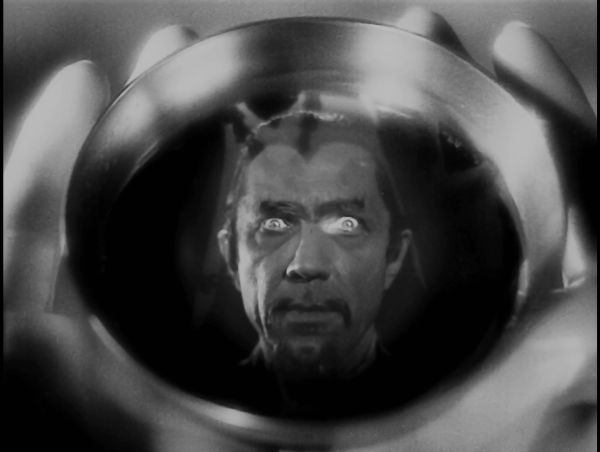
In the late 1920s, travel writer and bona fide eccentric William Seabrook traveled to Haiti to write a book about the Haitian religion Vodou (often spelled “Voodoo”). The result, which was a hit, is now largely seen as a dated and racist document in which Seabrook positions himself as a bold adventurer into the heart of darkness, and Haitians emerge as the frightening Other. When Seabrook heard tell of a creature called a “zombie,” he asked one of his guides if it was real. His guide said yes and brought him somewhere to view not the slow-moving beast we all know from the movies, but a group of workers for the Haitian-American Sugar Company. Seabrook did not make much of this discrepancy, and when his runaway bestseller was made into a film called White Zombie, Hollywood sensationalism ran rampant, and zombies (all of them portrayed by Black actors) made their first appearance on American screens, according to the experts interviewed in Maya Annik Bedward’s documentary.
Black Zombie seeks both to unearth the history behind one of horror cinema’s favorite creatures and to set the record straight—not just as to their origin, but as to the true nature of Vodou as a serious religion and the long history of Western oppression in Haiti. Zombies, as many commentators (scholars, filmmakers, and even legendary guitarist Slash) tell us, are the perfect symbol for an enslaved person, the abuse of enslavement having robbed the body of its soul and rendered the slave into nothing but a walking corpse. They state that zombies are adjacent to, though not strictly part of, Vodou. Their analysis takes us through the history of Haiti since colonization—with an emphasis on the enslaved people brought over from Africa—the reality of Vodou versus its bugaboo reputation in the West, and the various manifestations of zombies in American movies and how they relate to their origin. The emphasis, writ large, is on reclamation and recognition.
On this count, the film is largely successful, and quite a few of its many strands fascinate in and of themselves. Haitian history, all the talking heads make very clear, is ripe for the creation of a creature to represent enslavement. After the successful Haitian Revolution, the new government was nonetheless pressured, via negotiations with France, to pay copious amounts of money as compensation to former enslavers. During the U.S. occupation of Haiti, Haitians who practiced Vodou were punished by being forced into what might as well have been slave labor (the zombies Seabrook saw). Zombie movies, so the commentators say, are redolent of a collective fear of the oppressed masses rising up, and they make a strong case for it.
I do wish the commentators had explored contradiction as much as reclamation: specifically, how zombies have become a very flexible metaphor, encapsulating both the fear of the enslaved and the fear of being enslaved and soulless. They start to touch on this in the section on Night of the Living Dead, as well as through brief excerpts from the films of Zandashé Brown (who is interviewed), but they could have gone much further.
Also, while this documentary certainly presents a valid and insightful analysis of its subject, it must be said that this information is not exactly new, nor is all of it in line with previous scholarship. Marina Warner, for instance, in the series of lectures collected in her book Fantastic Metamorphoses, Other Worlds, dates the first appearance of the word “zombie” in the West not to Seabrook, but to Robert Southey’s History of Brazil, a multi-volume work published in installments between 1810 and 1819. “Zombi” was the name he heard a group of formerly enslaved Angolan rebels give to their god. An incredibly complex analysis follows, citing the various permutations and implications of the term not only in Haiti, but in the Caribbean writ large.
If Warner’s book or any others on the subject are ones the viewer has previously come across, they will finish Black Zombie feeling like a fascinating topic was broached, but not fully explored. Yet, if viewers are new to this hidden history of the zombie, this film is certainly a solid introduction to it.







Leave A Comment