
After spending two weeks navigating the broad selection of films during the 25th anniversary of the Tribeca Festival, it is worth highlighting three standouts that should not be missed upon their theatrical releases—and advocating for them to receive the distribution they deserve: a modern adaptation of Virginia Woolf’s Mrs. Dalloway that doesn’t sacrifice an ounce of the original source’s piercing intensity, a mesmerizing romantic experiment told across two simultaneous timelines, and an unpredictable show-business comedy.
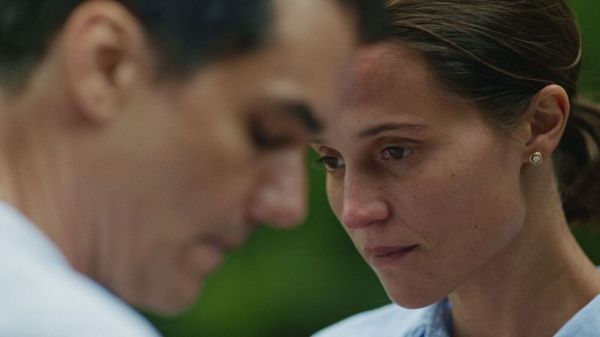
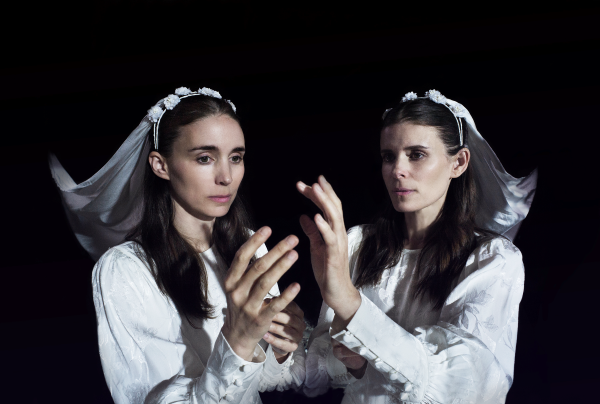
The Last Day immediately deserves to be counted among the most impressive directorial debuts this year, announcing the arrival of an artist with remarkable precision and clarity in her use of cinematic language. We can call it predestination: American visual artist Rachel Rose is hardly unfamiliar with the moving image, having already built a notable career through video installations featured in solo exhibitions and major museums around the world. Directly inspired by Mrs. Dalloway, this modern adaptation replaces early 20th-century London with present-day New York, turning Virginia Woolf’s iconic 1925 novel into pliable material for exploring feminine and human interiority (in that order) over the course of an ordinary day—which will seem banal to some, but unexpectedly crucial to others.
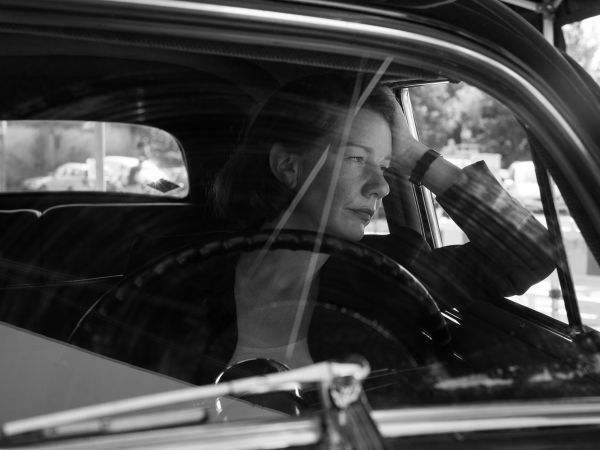
Julia (Alicia Vikander) is modeled after Clarissa Dalloway from Woolf’s novel, a mother who also happens to be a writer—or used to be, having spent years struggling with a creative block. Every Fourth of July, she hosts a party without fail at her upstate home. Alongside the preparations, she makes several trips into the city that gradually transform her day into something far more emotionally turbulent than mundane: an unexpected walk through Central Park with a former lover (Wagner Moura) with whom much was left unsaid, and a meeting with a literary agent (Marin Ireland) that only deepens her sense of uselessness over her inability to write. It should have been a warning to her when the day began with a deer struck by a car and a fawn standing in shock before its mother’s corpse. Images of nature at the edge of civilization and suburbia foreshadow the lyrical richness of a meditative contemplation of both the physical and emotional worlds closing in around the characters.
Taylor (Victoria Pedretti), a young mother of three, including a newborn, struggles with postpartum depression, mirroring the war trauma carried by the soldier character in Woolf’s novel. Never entirely understood by her husband, Ben (Michael Stahl-David), who is supportive but perpetually occupied by long workdays, her day is similarly filled with details and catalysts that steadily intensify feelings of loneliness and despair. In a scene where she listens to a children’s story alongside other mothers and their babies, Rose’s approach transforms the ordinary into something sublime and painful through image and sound editing that interweaves memories and symbols while trusting Pedretti to communicate a pain that cannot be expressed through words.
Reaching extraordinary heights of visual poetry, The Last Day vibrates with a particular emotional intensity. The film immerses us in the vulnerable filigree of the women’s inner worlds, contemplating and honoring the beauty taken for granted in day-to-day activities and the secretly devastating burdens carried for years.
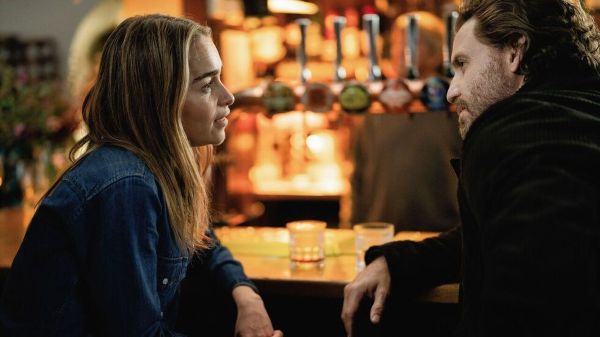
With a less tragic but equally moving sensibility, the almost metaphysical romance Next Life causes us to swoon right away, thanks to the chemistry and magnetism of two actors Hollywood has not fully taken advantage of, yet who seem born for this kind of movie: Emilia Clarke and Edgar Ramírez. Writer-director Drake Doremus embraces a peculiar narrative structure, alternating between two simultaneous versions of the same story shaped by different choices made by its characters. It is one story split in two directions, and we never know which path—or whether either one—will lead to a happy ending or a realization that some lovers are condemned (or blessed) by timing itself.
With inevitable but welcome echoes of La La Land and A Star Is Born, Ivy (Clarke) and Diego (Ramírez) are both singers who find themselves attracted to one another after a conversation aboard a train. Or at least that is what happens in one of the timelines, where Ivy accidentally spills coffee on both herself and Diego while traveling to a christening at which she will serve as godmother. After apologizing to her seatmate, Ivy strikes up a casual conversation with Diego that quickly reveals the possibility of mutual attraction, though she is still dealing with the heartbreak of a long-term relationship. Noah (Jack Farthing) will also attend the event as godfather, and perhaps the circumstances seem ripe for reconciliation. That does not happen here, but rather in the alternate timeline where Ivy never spills her coffee and the two strangers never exchange a word. Even so, fate still finds ways to bring them together.
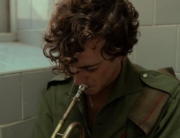
The fundamental problem with parallel-timeline narratives is often that one story inevitably becomes more compelling than the others, favoring the version we most want to follow. That is largely true here with the timeline focused on Ivy and Diego’s relationship, as opposed to the one centered primarily on Ivy and Noah. In one scenario, Ivy reconnects with the dream of becoming a singer that she had abandoned, inspired by Diego and drawn into his world as an acclaimed Venezuelan jazz singer. Both Ramírez and Clarke shine during the musical performances. In the alternate timeline, Ivy is defined by the surrender of that dream and resigns herself to an office job in Noah’s company. The two reconcile and attempt to build a family. There is little doubt which half of the film feels more exciting, but Doremus keeps a few aces hidden up his sleeve that force us to reconsider what we thought we wanted for the couple and the various narrative possibilities laid before them.
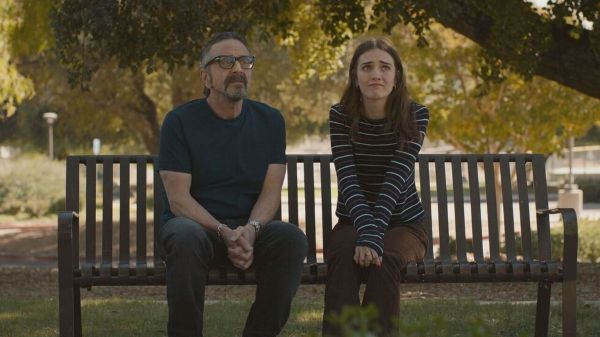
Finally, on the comedy front, Rob Burnett’s In Memoriam stands out as an unexpected crowd-pleaser that transforms the fear of death into a hilarious race against time toward the grave when an actor, mostly known for his television work, learns he has six months left to live. Langston Stanfield (Marc Maron) receives a terminal cancer diagnosis, and while there are many things he should probably consider, his greatest concern is whether he will make it into the Academy Awards’ “In Memoriam” segment once his time comes.
Stanfield transforms what others might dismiss as a foolish and trivial concern into the defining purpose of his remaining months, even refusing treatments that could extend his life by one or two years at the expense of the quality of the time he has left. His role on The Marshalls, an outdated Roseanne–like nuclear family sitcom, made him a television star, but it represented a form of selling out after a career of acclaimed performances in independent films. A great actor who squandered his potential, Stanfield fears that the decisions that robbed him of any possibility of winning an Oscar have also eliminated his chances of appearing in the “In Memoriam” tribute. His agent Walter (Michael McKean) assures him he will at least be included in the Emmys segment, but Langston is far too proud to settle for that.
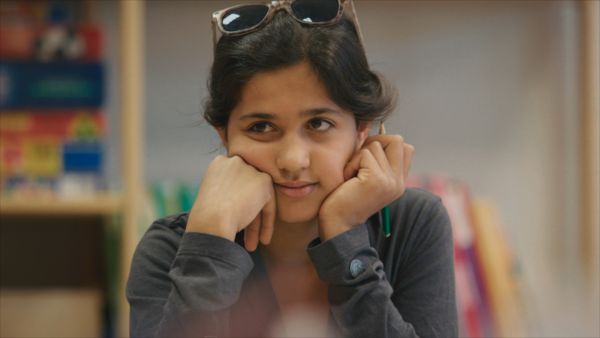
At the urging of his therapist Samantha (a wonderful Lily Gladstone), Langston agrees to meet Maura (Talia Ryder), his abandoned—and only—adult daughter from the first of four marriages. The comedy centered on securing a posthumous tribute becomes the perfect excuse for an endless stream of cameos ranging from Jimmy Kimmel to Justin Long. Maron also shares a moving scene with an extraordinary Sharon Stone, who plays one of his ex-wives and is an acclaimed actress also dying of cancer. This coincidence further jeopardizes his already slim chances of inclusion, especially since the producer overseeing the segment is her ex-husband—the very man Stanfield stole her from back in the day.
Capable of taking the audience from laughter to tears with remarkable ease, In Memoriam transforms Stanfield’s ordeal from a bittersweet Hollywood satire into a profound study of a vain man who may still be able to learn a thing or two before it is too late.


Leave A Comment