
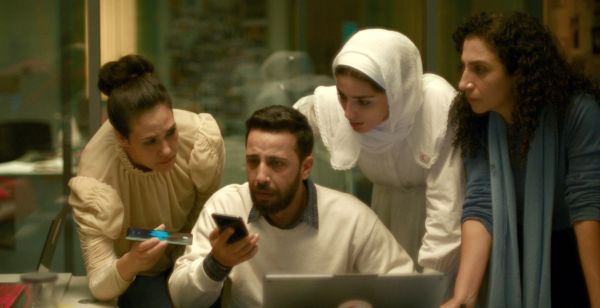
On January 29, 2024, a five-year-old Palestinian girl named Hind Rajab was fleeing from Gaza City with six of her family members as the Israeli Army laid siege to the area. The army opened fire on their car, killing all except Hind and her 15-year-old cousin, who was able to call the Palestinian Red Crescent Society for aid. Soon, Hind was the only person left alive in the car and was intermittently on the phone with the Red Crescent throughout the day and into the night as the organization tried to retrieve her. Their efforts were complicated by the difficulty of getting the go-ahead to send an ambulance to her location. In the end, their attempt to save her was unsuccessful, for the ambulance came under heavy fire.
The Red Crescent recorded and released their conversation with Hind. Her death became symbolically significant to the Free Palestine movement and was scrupulously investigated by outlets such as the Washington Post. In April 2024, one of the student protests at Columbia University involved hoisting a banner over Hamilton Hall that read “Hind Rajab Hall.”
Filmmaker Kaouther Ben Hania has made a work that is midway between documentary and fiction. The action takes place almost entirely within the office of the Palestinian Red Crescent Society, portrayed by actors. Presumably, much of what occurs aside from Hind’s phone calls is fictionalized, lightly. Hind’s voice, however, is heard from the actual phone recordings, and the conversations with her are followed to a T.
The film tracks the action from the moment the first call was received to Hind’s death and includes an onscreen interview with her mother afterward. The camera pays plenty of attention to the actors’ faces as the responders try to comfort Hind in full knowledge of the grim situation, as they have not yet received clearance from multiple agencies to send an ambulance. The acting is strong, and certainly following this horrific day so closely is one way of laying out the war in Gaza. And, of course, it is powerful to hear the voice of the victim herself. And yet, like several recent documentaries that use real-life footage of some kind and highlight real-life horrors (The Perfect Neighbor, 2000 Meters to Andriivka), there is a sensationalizing aspect to bringing the viewer behind the scenes like this. Often, when the camera lights on an actor whose face is contorted with pain as he or she speaks to Hind, the film grasps for pathos in a situation that speaks very clearly for itself. Consequently, for this viewer, discomfort steadily magnified throughout the film, especially since Hind Rajab’s real voice was being used.
Furthermore, like the above documentaries, the film exposes a horror, not so much analyzing the context surrounding it. We live at a time when horrors are just a tap away from all our devices, and yet this film has little to tell us beyond what we could have guessed. Yes, the Israeli Army has committed war crimes according to Human Rights Watch and other international organizations, and, yes, it is tragic that innocent people are dying by the minute. What about everything that has led us to this moment? Movies of that kind are precious few, for the time being.

Leave A Comment