When critically approaching the live stage recording of a musical, a few considerations immediately come to mind. Chief among them is the difference between documenting an art form already complete in intention and execution, and filming it with an additional cinematic purpose or ambition. How much of the final result can truly be considered cinema? Storytelling changes from theater to film: Onstage immersion is arguably 180 degrees, while cinema promises a full 360. This issue was relevant when the proshot of Hamilton (2020) was released (and included on some year-end film lists), and it will likely resurface with the theatrical release of Merrily We Roll Along, a filmed version of the Tony Award–winning 2023 Broadway revival of the Stephen Sondheim/George Furth musical.
The musical’s return to the stage marked the culmination of a fascinating journey of critical restoration and commercial vindication for one of Sondheim’s major contributions to musical theater. Unlike many of Sondheim’s other works, the original 1981 production was initially buried as a commercial flop (closing after fewer than 20 performances) and met with poor critical reception. Conceived as a musical adaptation of the 1934 play by George S. Kaufman and Moss Hart, Furth’s book and Sondheim’s songs expanded the premise and enriched its unique structure.
The show dramatizes the lonely, corrosive road to success for an artist and the gradual disintegration of three friends who share similar dreams and ambitions—only presented in reverse. Each act moves further back in time, beginning with the friendship already shattered and ending with its hopeful formation. Perhaps it was too gimmicky or experimental for audiences (and critics) who were ready to embrace the era’s big spectacles (Andrew Lloyd Webber’s CATS opened the following year), but it’s hard to imagine there was once a time when something this original was so radically dismissed.
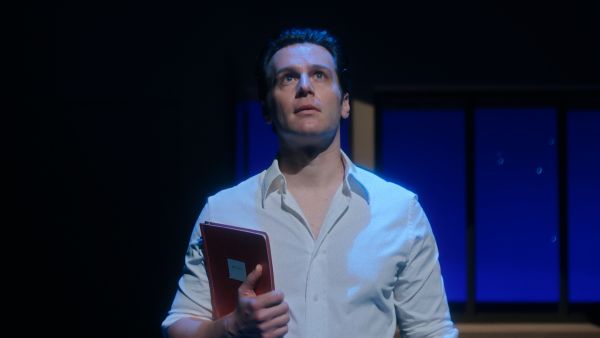
In 1976, Frank Shephard (Jonathan Groff) is a brilliant composer who ends up lonely at the top as a Hollywood producer, hosting a hedonistic party full of insiders and gossipers while juggling humiliating marital dramas involving both his wife and his lover. Music is no longer his passion—or perhaps he no longer needs it when he can succeed doing anything else, regardless of his former brilliance. Mary Flynn (Lindsay Mendez), once a theater critic who published a best-selling book, is now a full-time alcoholic, single by choice, and perpetually nursing an unrequited love for Frank. She attends the party at Shephard’s house, but little remains of their bond beyond memories and resentment. Meanwhile, Charley Kringas (Daniel Radcliffe)—writer, lyricist, and Frank’s former collaborator—is conspicuously absent. The mere mention of his name shifts the party’s atmosphere, as the guests sing “That Frank” with a tone full of backhanded compliments and parasitic entanglements.
Groff, a true triple threat, excels at masking pain while letting it shimmer in plain sight. He earned a well-deserved Tony for the role, and performing up close for the camera this time, he radiates the charisma and sex appeal that once made everyone else on Glee look second-tier. It’s hard not to lament that Hollywood missed an opportunity: He’s the real deal as a star.
Each earlier year is introduced by a transition motif repeating “merrily we roll along, roll along,” becoming more haunting and darker every time, even if technically everything becomes more hopeful for the characters, who have no idea what awaits them. The further back we go, the sadder the happiness becomes. As an audience, we already know where the three friends—and the other meaningful figures in their lives—end up, yet the structure reminds us that dramatic progression doesn’t rely on chronology so much as the accumulation of emotion in the right order.
The songbook here is stellar, but it gains double meanings and triple resonances when certain phrases and melodies recur in different moments. To say Sondheim was one of the great contributors to musical theater is an understatement: He pushed limits and broke boundaries to rethink what musical theater could do.
Directed by Maria Friedman, who also helmed the stage production, this proshot gives us the chance to enjoy the play as if seated in the best seat in the house while also offering close-ups and compositions otherwise impossible to witness. We occasionally hear an invisible audience laugh and applaud, but the mix of wide shots, medium shots, and close-ups sustains the illusion of being “in the room” rather than observing from outside—without ever reaching that full 360-degree immersion of cinema. The camera moves only as much as needed. There are a few inspired visual compositions involving the arrangement of the central trio’s faces, highlighting both the promise and the eventual unraveling of friendships once sworn to last a lifetime. But these are brief “new” brushstrokes in a whole that remains, broadly speaking, an invaluable act of artistic and cultural preservation with commercial potential: The hottest ticket on Broadway two summers ago is now within everyone’s reach.
Leave A Comment