
The legalization of abortion and the struggle for women’s autonomy to make decisions about their own bodies remains a current and heated topic on a global scale. In South America, particularly, the map of decriminalization varies, but it continues to be a highly controversial subject, with detractors in conservative circles constantly forcing advocates to remain vigilant and not rest on the laurels after any scarce legal victory. In Argentina, for example, it was not until 2020 that abortion was considered legal up to the 14th week of pregnancy and permitted beyond that in cases of rape or risk to the pregnant person’s life. Previously, and despite being partially decriminalized, the practice of clandestine (and dangerous) abortions was frequent, while the legal repercussions for those involved could be severely damaging.
The so-called case of Belén in the province of Tucumán in 2014 perfectly illustrated how the convergence of institutional misogyny, injustice normalized by arbitrary moral convictions, and the lack of strong legal protection could completely ruin the life of a woman who aborted. This case was even more disturbing considering that it was a spontaneous abortion by someone who didn’t even know she was two months pregnant. She went to a hospital with severe abdominal pain and ended up deprived of her freedom for three years.
This is depicted in detail here, based on the real events documented in the book Somos Belén by Ana Correa and directed by Dolores Fonzi, with an adapted screenplay co-written with Laura Paredes. Both Fonzi and Paredes, recognizable actresses in the Argentine film industry, appear in front of the camera. Fonzi portrays Soledad Deza, the renowned lawyer and activist who took up Belén’s case again to defend her after an initial preliminary conviction in which the accused was sentenced to eight years in prison.
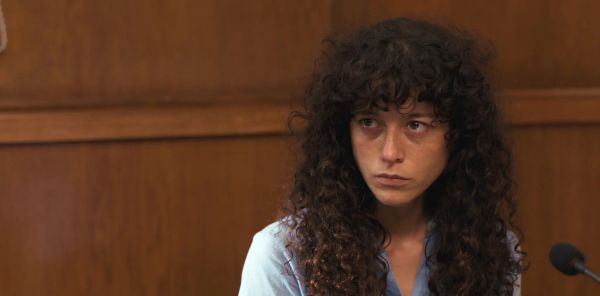
Julieta’s (Camila Pláate) visit to the hospital turns into a gruesome scene of social and medical distress when, in the middle of a uterine lavage procedure, the police burst into the examination room to arrest her, accusing her of having murdered her child and revealing the fetus they had found in the bathroom. (Her name is an alias.) Shocked, confused, and full of pain, she’s at the mercy of people who don’t care for her health at this critical moment. “The doctors acted like police, and the police acted like doctors,” is a phrase later recited by lawyer Deza, perfectly encapsulating the irregularities behind the case of Belén, a pseudonym to preserve Julieta’s anonymity in the face of public and media scrutiny.
Since she technically could not be imprisoned for the abortion itself, the case was framed as homicide, that the accused went to the hospital bathroom to perform a self-abortion. As absurd as it sounds, the young woman was not only unaware of her pregnancy but the clothes she was wearing (a midriff-baring shirt and tight jeans) already contradicted the notion that she was further along than the two months attributed to her. With a weak initial defense and little real commitment to help her, the 24-year-old woman ends up being declared guilty. However, lawyer Soledad, together with Bárbara (Paredes), her loyal associate, immediately take on the task of reopening the case and preparing a stronger, more robust defense despite the numerous acts of sabotage and obstacles placed in their path to delay progress.
Belén focuses equally on Soledad and Julieta, alternating between the life of the lawyer (mother, wife, devout Christian) and that of the prisoner (supported by her family, dealing with abuse and threats in prison), while also following the progressive development of the case and the relationship between the two women, which begins tense and later becomes sisterly.
The more meticulous the film portrays bureaucratic delays, the connections with feminist movements to generate noise (the emerging #NiUnaMenos movement in Buenos Aires), and the subsequent preparation of the defense, the clearer Paredes and Fonzi’s research work shines through. However, the film stumbles at times when certain creative liberties threaten to overload dramatically what is already serious: Soledad driving nervously while praying to her guardian angel right before nearly being hit by another car, or a fire breaking out in Julieta’s cell that inspires one of the guards to encourage her to escape to save her life. These cheap soap-operatic flourishes undermine the political potential of the material. (Instead of escaping, Julieta hopes instead to walk out the main door as a free woman.) Fortunately, Fonzi and Pláate rise above these moments with committed and immersive performances.
Selected as Argentina’s submission for the Academy Award for Best International Feature Film, it is evident that the decision was primarily motivated by a drive for social awareness, bringing attention to a case that connects with globally relevant conflicts. Guided by noble intentions, Belén is a historical film with little temporal distance from recent events, yet remains important for prompting reflection within Argentina and across the rest of the continent, while also holding a mirror to the United States after the repeal of Roe v. Wade.








Leave A Comment