
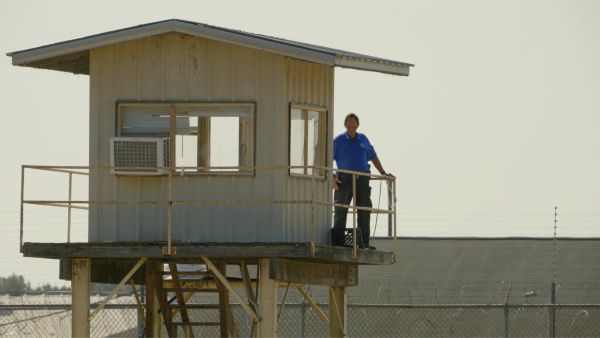
The opening scene of The Alabama Solution is profoundly at odds with the rest of the film: a barbecue with live music is taking place at an Alabama prison. This is presented as a day of festivities when inmates can simply relax and take a break. Yet filmmakers Andrew Jarecki and Charlotte Kaufman begin to hear whispers that the positive impression conveyed by this celebration is false. They are put in touch with some prisoners who have contraband cell phones, and an investigation of unprecedented scope begins.
What follows is a documentary unfolding in real-time, beginning in 2019 and ending six years later, told largely from the perspective of inmates, their families, and the occasional lawyer representing them. The filmmakers take a backseat. Between these years, multiple prisoners die, and the evidence suggests they were murdered by correctional officers, with the truth hidden with little to no finesse. Clandestine interviews over FaceTime and leaked, horrifying footage comprise some of the film’s most powerful content.
Over three years, the prisoners successfully petition the Department of Justice to sue the state in 2020. In response, Alabama lawmakers avoid making any genuine improvements and instead double down on harmful policies. A prison strike of astonishing scope also fails to achieve any long-term results. The chief activists are Raoul Poole; Melvin Ray and Robert Earl Council (aka Kinetic Justice), two longtime prisoners who have been working for years to expose the inhumane conditions of the prison system; and Sondra Ray, the mother of inmate Steve Davis, whose brutal murder she seeks to prosecute. According to the film, Alabama prisons have the highest rate of murder, rape, drug overdose, and assault in the nation.
This is not easy viewing, but it is informative, impressive, and horrifying. The filmmakers adeptly use the footage to remarkable effect, illuminating the horrors without overwhelming the viewer. They add context with statistics, excerpts of radio and TV shows, and, most importantly, let their subjects speak for themselves—no small feat, considering these individuals risked their lives to do so. This is not an exaggerated exposé. The testimony from multiple sources, the leaked videos, the gruesome photographs, the brazenness of interviewed officers, and the nasty disregard of radio hosts for the protesting prisoners all paint a picture of Alabama’s underfunded, exploited, and unregulated prison-industrial complex (and, by proxy, that of the United States).
Equally striking is the breadth of the resistance working to fight against human rights violations no matter the cost and organizing a state-wide prison strike large enough to frighten the powers that be. This includes a network of incarcerated men educating themselves about the law, having followed in the footsteps of former incarcerated civil rights leaders. Inspiring feels like an impertinent word given the context.
When you see exactly how unmoved Alabama Governor Kay Ivey is in the face of such resistance, and how unwilling a large number of citizens are to advocate for prisoners (though there are exceptions), further questions arise. A deeper inquiry into the psychology and ideology of those who keep prisoners where they are, in addition to the economic forces, is perhaps in order. Still, this investigation is well worth every viewer’s time. The filmmakers elucidate conditions that cannot be ignored.







Leave A Comment