
First, we see a few shots of present-day Khartoum—that is, Khartoum in 2023. The streets are nearly empty except for military personnel and a few stragglers. The buildings appear abandoned, some covered in graffiti that speaks to a voice of resistance absent from the streets. A voice-over addresses Sudan in the second person, as if speaking to a loved one forced to leave. Though fully aware of the violence and repression under the military dictatorship, this voice also reaches out to a different Sudan, a place that could have been.
The film then moves back in time—not to the distant past but to 2019, a pivotal moment in Sudanese history when Omar al-Bashir, the military dictator who ruled from 1989 to 2019, was finally deposed by a coup triggered by sustained civil disobedience led by engaged, idealistic citizens. This wave of activism continued with the goal of ending martial law and establishing a civilian government. The result was a transitional government, half civilian and half military, which protesters hoped would guide the country toward meaningful reform. By 2023, however, that hope was dashed. The military resumed full control, civilian officials were arrested, protesters were beaten and killed. Civil war erupted among factions within the military, forcing nearly four million people to flee the country.
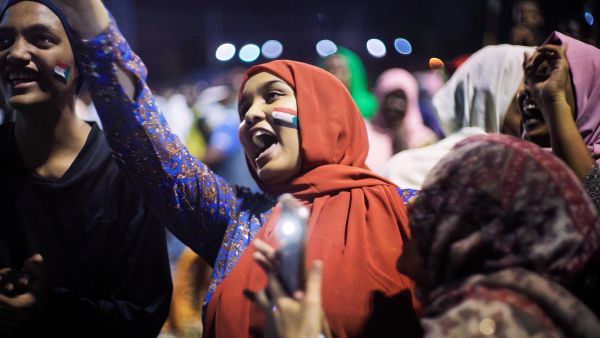
Filmmaker Hind Meddeb arrived in Sudan during this brief moment of hope to capture it. She films conversations between activists, moments of downtime during long hours of civil disobedience, songs of resistance in the streets, and candid interviews with activists who are at once hopeful and grimly realistic about Sudan’s prospects. Despite the harsh context, many of these sequences carry an easy, relaxed feeling, often showing people in states of joy and optimism. Quite possibly, this positive energy is what Meddeb intended to highlight most.
Interspersed are clips—often from smartphones—that capture the military encroaching on protesters. While we don’t see much direct violence, there is one sequence showing grenades thrown back and forth, and later, a bloodied man lying on the ground after a brutal beating. Throughout, narration in the form of letters exchanged between the filmmaker and those still in Sudan marks the passage of time, from idealistic revolution to the reinstatement of military rule.
Though this is a moving and tragic portrait of a country battered by decades of violence and human rights abuses (the crisis in Darfur is mentioned more than once), the film remains undemanding. Viewers may not come away with a deep understanding of Sudan’s complex realities. We learn what the protesters want—democracy, a citizen-centered government, and an end to human rights abuses—and that the military violently opposes and suppresses these demands, but little beyond that.
That said, toward the end, Meddeb points out that the Sudanese civil war is largely ignored by international media. Through the platform she gives them, the spirit of her subjects most certainly shines. If her primary goal was to let the viewer witness that, then she has succeeded.


Leave A Comment