In his entry on John Boorman for The New Biographical Dictionary of Film, David Thomson writes: “I am happy to have John Boorman as a friend who can at least tolerate my awe at the ups and downs of his own career.”
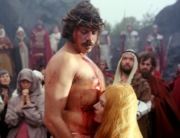
Ups and downs indeed. Though I haven’t seen them all, I’ve watched enough Boorman films to be sure that there was nothing tame or predictable about this bona-fide risk-taker. The cryptic and absorbing Point Blank, which concerns the violent antics of a revenge-crazed criminal and employs a daring nonlinear style, is my idea of a masterpiece. The more famous Deliverance is brutal and powerful enough to leave a deep imprint in the memory. But what about Zardoz, that allegorical and pretentious sci-fi movie where Sean Connery runs around in a mankini and a floating head vomits guns after expressing its distaste for male anatomy? I’m not certain I’ll ever know how I feel about that one, but I’m glad it’s there. On a similar note, I can’t decide whether Excalibur, his bombastic and erotic King Arthur film, is mythic and haunting or just plain silly. But it’s definitely not boring.
I’m not sure I ever knew that he was the director behind Exorcist II: The Heretic, which bombed cataclysmically at the box office in 1977 and almost ruined his career. David Kittredge’s documentary Boorman and the Devil brings Boorman and many of the surviving cast and crew back to this notorious flop to revisit the conditions that led to its making and in which it was made. It’s a story of surprising chaos, even for an overly ambitious film.
First of all, neither Boorman nor The Exorcist star Linda Blair initially wanted to make it; both, ultimately, were enticed by the prospect of turning the previous film on its head. So, instead of a cold and stark tale of evil, this one was to be a dreamlike and ecstatic fantasia, in which Blair would not need to wear disgusting makeup. And then there was a roulette of sorts searching for other stars: the unreliable Richard Burton ended up in the mix with Louise Fletcher and Max von Sydow, one of the few original cast members besides Blair who came back (Lee J. Cobb died before filming began). And then the production itself was plagued by myriad frustrations and reversals, not least of which was an illness Boorman suffered as a result of a sandstorm created for the movie that set back filming by five weeks. The setback, in turn, led to an impulsive rewriting of the script, which angered the actors, and an equally impulsive revision of the end, so that Burton could head off to film Equus by a certain date. When the film was ridiculed in theaters, Boorman ended up editing yet another cut, which ultimately did not change the film’s reputation or soften the wound.
The cast, crew, and a few directors and critics join Boorman as talking heads to offer their insight, and they have plenty to offer by way of their various excitements and disappointments, the technical feats and mishaps, and the visionary elements and cringeworthy overreaching involved in this unconventional sequel. Much of it is charming, especially the gossip about the various squabbles between cast members, and it captures a sense of both the thrilling and maddening aspects of working with Boorman, as well as the perfect storm of bad luck that conspired against them.
Nonetheless, the behind-the-scenes look tells a well-worn and obvious tale centered on a maverick filmmaker. Essentially, all involved end up singing praises to the spirit of risk-taking, pooh-poohing the small-mindedness of the sequel-hungry masses, and saluting Boorman and others for creating failures (as well as successes) that are at least interesting.
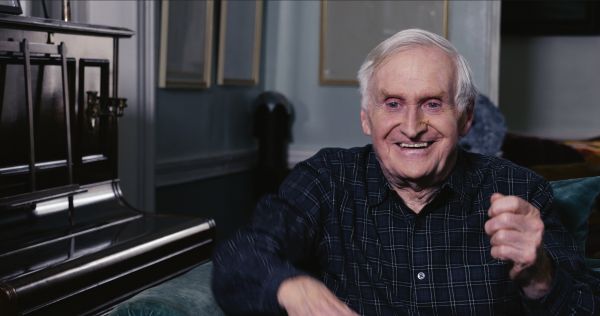
However, Kittredge spends too much time rehashing the production and not enough taking advantage of the uniqueness of his situation: Here is an 85-year-old director, willing to discuss on camera one of his greatest failures and its place in his whole career. What, looking back on it, did the experience do for him, not purely as a setback, but as something that potentially expanded and enlarged his films to come? These questions are addressed: the commentators cite him as an inspiration for boundary-pushers yet to come, and Boorman reflects that the experience had him reevaluate the filmmaker he wanted to be. Still, I couldn’t shake the feeling that the above was given only cursory attention, and that the film could have been more unique if Kittredge had shifted the emphasis of his inquiry.
Also, we do not necessarily finish the film feeling much closer to Boorman’s artistry, though in the few moments when he discusses it in detail, everything lights up. That being said, it certainly provides an impetus to see more from his long filmography. I’m told The General is just as good as Point Blank, though in a completely different way.







Leave A Comment