
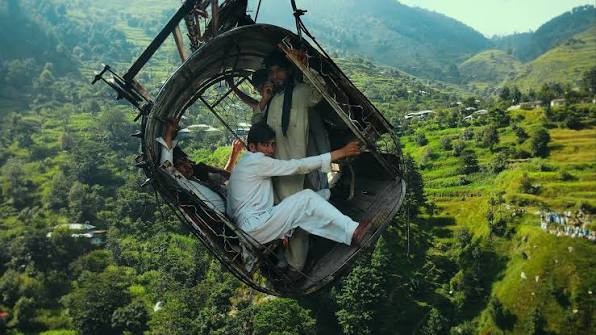
In the foothills of the Pakistani Himalayas, there are towns so isolated that a daily commute to school is made via cable car 900 feet above a ravine. At least, this was the case in Battagram until August 22, 2023, when one of the cables snapped, six teenage boys and two adults were suspended mid-air in the car, and, to the many onlookers who gathered, their death seemed more likely than not. Nevertheless, social media posts from the villagers and leverage from news anchors who hailed from the region led to enough coverage that the authorities brought a rescue mission to the remote area. Though the operation was successful, it was full of false starts, periods of appalling silence, conflicts between opposing parties, and a few jaw-dropping mistakes that threatened to undo the efforts of all involved. To this day, that cable car still hangs, unrepaired, in the air above the ravine.
Filmmaker Mohammed Ali Naqvi was among those watching the potential disaster, and his documentary combines his footage with that of others, alongside interviews and commentary, to commemorate this white-knuckle event. The result is, for the most part, a benign yet conventional documentary that places its cards on accessibility. Much of the footage is appropriately stunning—certainly the vistas fail to disappoint—and many of the near-death feats of the rescuers are captured with impressive precision. The parents of the imperiled children receive dutiful screen time, describing the (very understandable) trauma they experienced on that day, as do, eventually, the teenagers themselves. The logistics of the endeavor are recorded with admirable clarity through interviews with the police captain in charge of organizing the mission, a local cable repairman who took matters into his own hands, and official parties who joined in with the authorities’ blessing (the army and a bodybuilder whom the police recruited). All of this is set to a typically Hollywoodish score that makes the film play a bit like a sports movie.
Many viewers will come away satisfied by the (truly) astonishing story of rescue and by the footage with which so much of it is captured. However, there is a second story here that, though it receives some treatment, is given short shrift by the film’s bland tone and sensational areas of focus. That is the story of a remote area of the country that the authorities largely ignore; of the disconnect between outside forces imposed upon a locale versus those from within; and of a narrowly averted disaster that also revealed tensions among different parties (the law, the locals, the government) that even a miracle like the rescue is unlikely to resolve. Although Naqvi mentions these issues, he also seems to back away from them. The above angles are what strike me as truly singular here, and films succeed best when the singular is brought fully to light.









Leave A Comment