|
Reviews of Recent Independent, Foreign, & Documentary Films in Theaters and DVD/Home Video
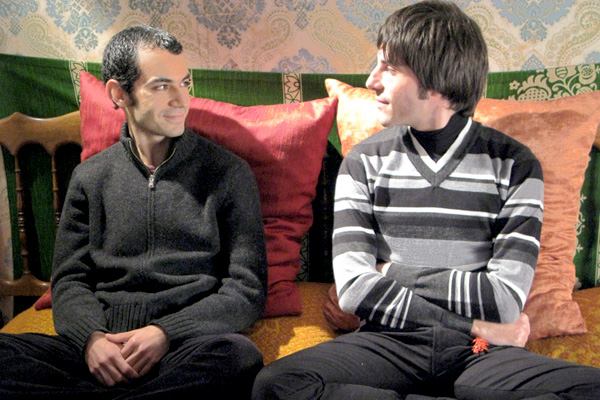
THE 66TH VENICE FILM FESTIVAL God and gays. Both featured prominently in the opening days of the 66th Venice Film Festival, which was so well organized that you’d think you were in Germany. Even before the opening night, actress Maria Grazia Cucinotta (Il Postino), the festival’s hostess, bluntly proffered her support for gay rights: “The world is full of morons. The love between two consenting people should be respected. Homosexual or not matters little. I will bring to the Venice festival this message.”
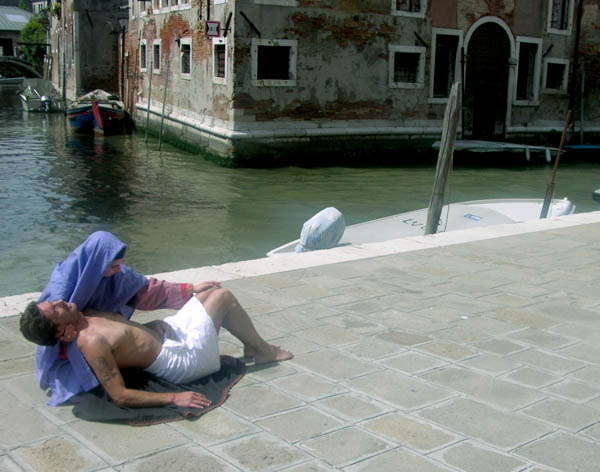
This is one of the 14 films under consideration for the third annual Queer Lion award, Venice’s answer to the Berlin Film Festival’s Teddy Award. However, the jury of this award can choose any of the films in the entire festival. Also under consideration (mostly for its depiction of male rape) is Valhalla Rising, a great title, but a plodding and an almost unbearably bleak depiction of the waning days of paganism in Northern Europe as Christianity encroaches. It stars Denmark’s biggest international star, Mads Mikkelsen, as the appropriately named One Eye, a mute fighter with superman strength. In one instance, he single-handedly disembowels an opponent.
With so many awards to hand (besides the film in the main competition and an honor for best debut feature), the festival may be spreading the wealth too thin, trying to please one and all. For the first time, the Fiuggi Family Festival (never heard of it either) and the Movimento per la Vita will bestow a “pro life” award, vaguely described in a press release as a recognition for a film that “best contributes to promoting the support of human life.”
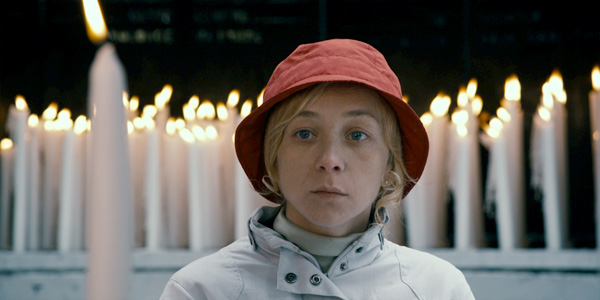
And in the main competition section, Austrian filmmaker Jessica Hausner’s luminous Lourdes has a real shot at winning the top prize. Hauser’s direction is extremely precise (turn away and you may miss the smallest gesture, on which an entire scene is centered). The static camera and the long takes, with characters frequently facing away from the viewer, may be too austere for some, but as the film moves forward, it becomes gripping, even suspenseful, without shedding its coherence or credibility when a miracle, or at least an eyebrow-raising turnabout, occurs among a group of pilgrims to Lourdes, France. Unquestionably, the use of
nonprofessional actors with infirmities and the filming on the location
where St. Bernadette claimed to have seen the Virgin Mary in 1858, as
well as the many real-life religious services, lend a strong dose of
reality. Hausner’s biggest achievement, though, is creating subtle yet
fleshed-out characters. Her film is neither condescending, irreverent,
nor reverent, much like the main character with multiple sclerosis,
Christine (Sylvie Testud, never better), who is neither pious nor
irreligious, and not entirely selfless. (Her main reason for coming to
Lourdes is that it’s one of the few excursions available for the
wheelchair-bound.) The film is not really about miracles or faith, but
more about the acceptance of change. As an officious character points out, what’s more important is
the healing of the soul, rather than the body. Lourdes
is one of five new films that made a strong impression in the first half
of the festival. For the others, read on.
Kent Turner
|